

At some stage in every project, structure alone just isn’t enough. You can have:
Clear workstreams
Defined ownership
Executive alignment
Visible progress
Yet, it can still feel like something is missing. That’s because delivery isn’t only about what gets done. It’s also about how the work gets done and who takes the initiative to make it happen. It started to show as the program moved from planning into execution.
Where the Real Work Lived
At this point, two streams became the main focus:
The replacement of intranet content and functionality
The uplift of a legacy product constrained by outdated technology
Both were time-bound. Both were complex. Both required more than straightforward execution. They needed coordination, decision-making, and a kind of adaptability that process alone can’t provide.
When One Problem Becomes Two.
At first, the intranet work seemed like a single stream. But it wasn’t. Very quickly, it revealed two distinct challenges:
Content that could be migrated relatively cleanly
Functionality tightly coupled to the legacy licence
Each required a different approach. So, we decided to do this without formal processes or extra bureaucracy, but with clear intention.
Content migration became a structured, business-supported effort.
Functional components required deeper technical delivery and coordination.
This empowered and enabled both streams move forward quickly, without one holding back the other.
There’s a simple but important lesson here: when the nature of the work changes, the way you deliver should change too.
Constraint That Became the Opportunity
Within the technical stream, there was an established way of working. It had changed over time, shaped by what worked in practice. Work was typically assigned, decisions about who did what sat largely with the delivery lead. With the pressure of this program, that approach would be limiting.
This wasn’t a situation where one leader could or should make all the decisions.
Shifting the Dynamic

‘The function of leadership is to produce more leaders, not more followers’ - Ralph Nader
Rather than bringing in a new framework or forcing a process change, we chose a more practical approach. Changed how problems were presented.
Instead of assigning tasks to individuals, we began presenting problems to the team, and then we paused.
That pause matters.
That pause gives space for something different to happen.
What Happened Next
At first, there’s always a moment of hesitation.
People are used to being directed, used to waiting, used to being told where to focus.
But when people had space and clear goals, something shifted:
People started stepping forward.
Not all at once and not in a perfectly coordinated way, but enough.
And then more.
From Task Ownership to Shared Ownership
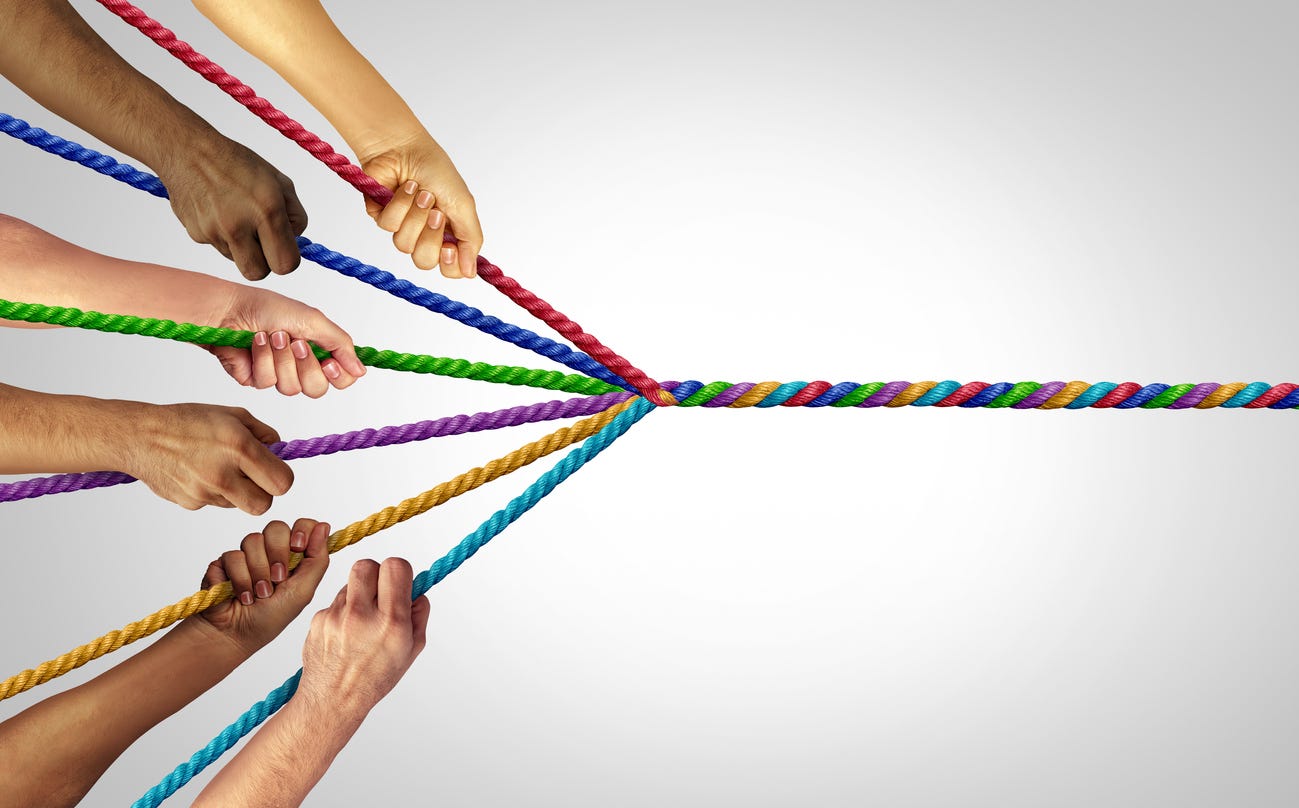
What happened next wasn’t just a change in how work was assigned. It was a change in how the team saw the work itself.
Problems became shared challenges, not assigned tasks.
Work progressed in parallel, not in sequence.
Individuals began to take ownership of outcomes, not just activities.
And with that, something else happened: Momentum.
The Emergence of Micro-Leadership

One of the most interesting outcomes was what I’d call micro-leadership.
Individuals who weren’t in formal leadership roles began to:
Step into coordination
Guide small pieces of work.
Support others
And make decisions within their domain.
Not because they were asked, but because the environment made it possible. it.
These moments are easy to miss unless you’re paying attention. But they matter.
Because they’re often where capability grows the fastest.
Watching these moments emerge has been, and will continue to be, one of the most rewarding highlights of my leadership career.
A Different Kind of Coaching
‘Leadership is not about being in charge. It is about taking care of those in your charge’ - SImon Sinek
During this phase, my role wasn’t to direct; it was to enable it.
That meant working closely with managers to support how they approached the work.
This included:
Coaching on project structure and flow
Supporting decision-making under pressure
And, just as importantly, I challenged old patterns when they no longer served the outcome.
Evolving Leadership Styles
For the Software Delivery leader, this was a time to reflect.
The usual approach, which was more structured and directive, had worked before.
But in this situation, it was causing a bottleneck. We explored an alternative:
Shifting from assigning work
To help the team organise itself around the work wasn’t a theoretical conversation.
We put this into practice right away, and it had real effects. And the results spoke for themselves.
What Changed on the Ground

You could really feel the change.
Work began moving faster.
Multiple threads progressed simultaneously.
Knowledge sharing increased naturally.
And individuals gained exposure to areas they hadn’t worked in before. But maybe the biggest change was in the atmosphere.
There was energy. It was that feeling you get when a team isn’t just working,
but engaged.
Conversations were happening, problems were being solved collaboratively, people were leaning in. The team had something many aim for but rarely keep:
The buzz of a team performing at pace.
Supporting the Momentum
With that shift underway, the focus became:
How can we keep this going?
Two practical productivity-boosting decisions helped:
Providing flexibility in how and where people work
Offering paid overtime for those who wanted to and could contribute more, endorsed at an executive level, recognising the time-bound nature of the work.
But even more importantly, they sent a clear message:
We trust you to do what’s needed, and we’ll support you along the way.
Learning in Motion
While the team delivered, something else was happening too. The team was learning.
New technologies
Different parts of the system
Alternative ways of working
They weren’t learning through formal training, they learned by doing.
And because the environment supported collaboration, that learning spread quickly.
More Than a Delivery Shift
It might be easy to call this phase a successful change in how we delivered. But that would miss the real point. The real change wasn’t just in how the work got done. It was:
How people saw their role in it
How leaders engaged with their teams
And how ownership was distributed across the group
A Thought to Leave You With

There’s a common belief that structure creates high-performing teams. But it’s not enough.
Performance doesn’t come from control. It comes from:
Clarity
Trust
And giving people the space to step forward. When teams are given problems to solve, not just tasks, they don’t just deliver. They grow.